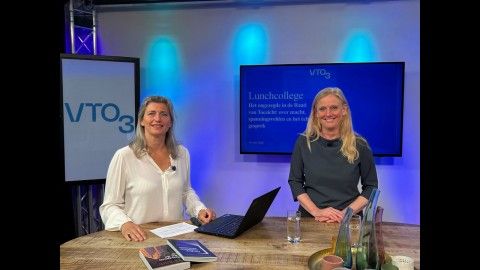

Marilieke Engbers is on a mission. The leadership expert wants to open the black box of boardrooms, to show how blind spots and unspoken thoughts lead to problems. 'A lot remains unsaid at meetings, but directors and supervisors are often not aware of that.'
Read MoreGOVERNANCE & HET ONGEZEGDE
Services
Guidance on self-evaluation
De context waarin bestuurders en toezichthouders werken is complexer geworden: verwachtingen verschuiven, maatschappelijke druk neemt toe en impliciete verschillen worden sneller scherp. Ik zie wat dat met mensen doet en hoe gemakkelijk juist dát wat besproken moet worden, uit beeld raakt. In mijn begeleiding help ik het gesprek te verkennen: waar vraagt het om verdieping en waar niet? De voorbereiding is onderdeel van die zoektocht, individueel en gezamenlijk. Wat zichtbaar wordt, leg ik terug in de groep, zodat het eigenaarschap daar blijft. Ik ben een voorbijganger, maar wel één die wil helpen in een context die vraagt om rolduidelijkheid, strategisch gesprek en zorgvuldigheid in hoe we met elkaar omgaan. Omdat ik in boeken en op LinkedIn regelmatig verhalen deel en casuïstiek bespreek om het bewustzijn over toezicht te vergroten, kan de indruk ontstaan dat mijn kritische blik ook mijn rol als begeleider bepaalt. Die twee onderscheid ik scherp. In mijn publicaties neem ik positie om het vak verder te brengen; in de boardroom ben ik ondersteunend en procesgericht. Ik breng vragen, structuur en reflectie – geen oordeel. De raad houdt altijd regie over tempo, vorm en uitkomst.
Interactieve Lezingen & Dialogen
Through interactive sessions, I offer more than just knowledge transfer. As a speaker, I facilitate a dialogue on topics that matter but are often difficult to discuss. My lectures and workshops focus on reflection, recognition, and conversation—at a strategic level while also paying attention to human dynamics. Depending on the specific request, I work with specially designed simulations and methods that help to experience the unspoken: implicit assumptions, tensions, power, and counter-power. This makes my sessions interactive, insightful, and directly applicable in practice. I speak the language of executives, supervisors, and leaders, connecting academic insights with recognizable practical experience. Themes I regularly speak about: Governance paradigms and changing context; Dilemmas, silent conflicts, and the unsaid; Power and counter-power; Risks associated with long-serving directors; Cultures of speaking and silence; Leadership and chairmanship styles; Dealing with differences and conflicts; Diversity and dynamics in the boardroom; Strategic dialogue and strategy realization; Paper power and what it masks. My lectures are suitable as keynotes, interactive lectures, or in-depth sessions for leadership development programs, boardrooms, governance training, and gatherings where reflection and dialogue are central.
Research
My passion is research. I consider everything I do a form of research, but formally, I'm a researcher when I write scientific papers. It took me years to get my first scientific publication accepted in a top international journal in my field. I'm now working on several papers that are well advanced, although I know it will take time to get them published, if at all. Investigating the unsaid also brings with it a confrontation with the philosophy of science, and thus with the fallacies that exist not only in the boardroom but also within science itself. Including my own. This makes it not only an intellectual challenge but also a fascinating reflection on the relationship between science and governance.
About Marilieke
Marilieke Engbers (1969) promoveerde in 2020 aan de Vrije Universiteit Amsterdam op het onderwerp "Het ongezegde in de boardroom en de impact ervan op strategische besluitvorming." Met meer dan 20 jaar ervaring begeleidt ze CEO's, bestuurders, directeuren en hun adviseurs op het gebied van strategie, cultuur, leiderschap en verandering.
Sinds 2019 ligt haar focus voornamelijk op het begeleiden van zelfevaluaties van raden van commissarissen (RvC’s), raden van toezicht (RvT’s) en raden van bestuur (RvB’s), waarbij ze zich richt op het congruenter maken van governance. Haar doel is ervoor te zorgen dat wat wordt gezegd, daadwerkelijk in de praktijk wordt gebracht. Daarnaast begeleidt ze externe toezichthouders, inspecteurs en beleidsmakers in leertrajecten om hun governance-doelen te realiseren. Haar benadering is zowel kritisch als empathisch, omdat ze begrijpt dat mensen zich vaak niet bewust zijn van hun blinde vlekken.
Haar missie is om deze blinde vlekken, evenals de zelfgenoegzaamheid die vaak onbedoeld en onbewust gepaard gaat met macht, zichtbaar en bespreekbaar te maken. Marilieke erkent ook dat zij zelf blinde vlekken heeft en streeft er voortdurend naar om 'het ongezegde' in haar samenwerkingen met opdrachtgevers, collega’s en anderen bespreekbaar te maken.
Naast het begeleiden van bestuurders en toezichthouders, doet Marilieke wetenschappelijk onderzoek naar governance vanuit het gedrags- of ‘behavioral’ perspectief. Als actieonderzoeker richt ze zich op hoe governance verbeterd kan worden door een focus op gedrag, en ze onderzoekt ook de invloed van managementcontrolsystemen op leiderschap en cultuur als onderdeel van governance. Ze is tevens docent aan de registercontrollersopleiding van de Vrije Universiteit, waar ze strategierealisatie en leiderschap doceert.
Schrijven is een essentieel onderdeel van haar werk, omdat het haar helpt haar denkprocessen te onderzoeken en te verfijnen. Haar wetenschappelijke inzichten publiceert ze in boeken en academische artikelen, waaronder Onder Commissarissen (2021) en Eenzaam aan de top: over het ongezegde, macht en denkfouten (2024), dat ze samen met haar echtgenoot Pim Bouwman schreef.
Podcasts
Het goede gesprek in de boardroom
In deze aflevering duiken Yousri Mandour en Sven Turnhout samen met governance-expert en auteur Marilieke Engbers in de fascinerende wereld van de bestuurskamer. Waarom blijft in veel boardrooms het echte gesprek uit? Wat maakt het zo lastig om elkaar stevig aan te spreken of twijfels te delen? En hoe zorg je dat ongemak niet onder het tapijt verdwijnt, maar de motor wordt van echte strategische reflectie?
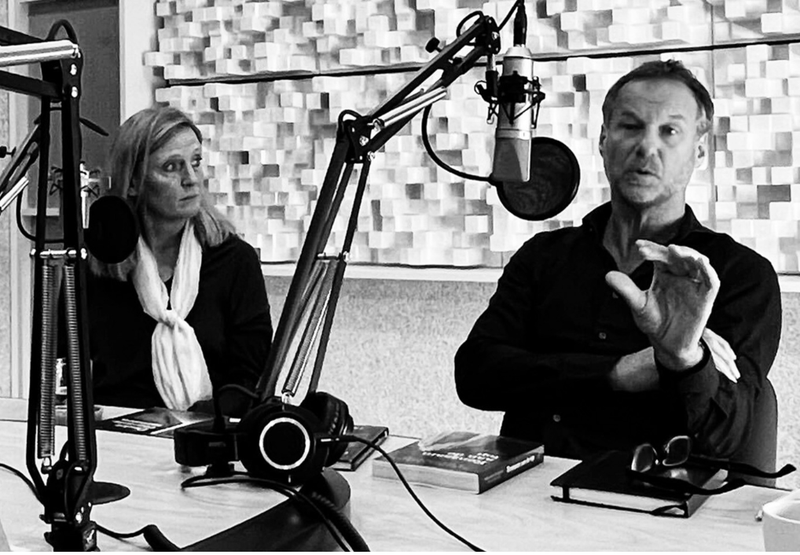
It is painful that managers do not show what they consider important
What happens in the boardroom when power and vulnerability collide? In the latest episode of De Boekenpraktijk, Marilieke Engbers and Pim Bouwman talk to host Willem van Leeuwen about their book 'Eenzaam aan de top'. The book offers a revealing insight into the dynamics of power, vulnerability and blind spots within organizations.
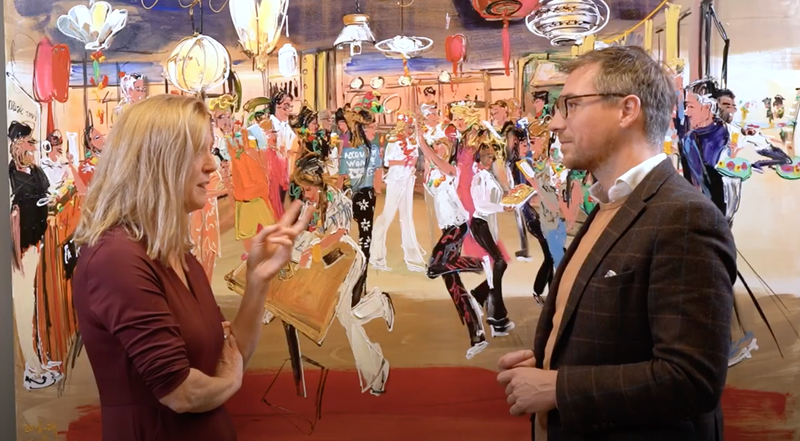
At the boardroom table, about the essence of governance and supervision
In deze AethiQs serie bespreek ik met Jochem Sluis van Aethics de essentie van goed bestuur, goede besluitvorming, macht, leiderschap en hoe het ongezegde de besluitvorming in de boardroom beïnvloed.
BNR Boardroom 27-08-2026
At BNR Nieuwsradio, I'm a boardroom panelist, reflecting on boardroom cases. I do this based on theory, empirical research, and the many self-evaluations I've facilitated for supervisory and non-supervisory boards. This time, I'm discussing Schiphol Airport, the knowledge test for accountants, and insider trading and irrational rules.
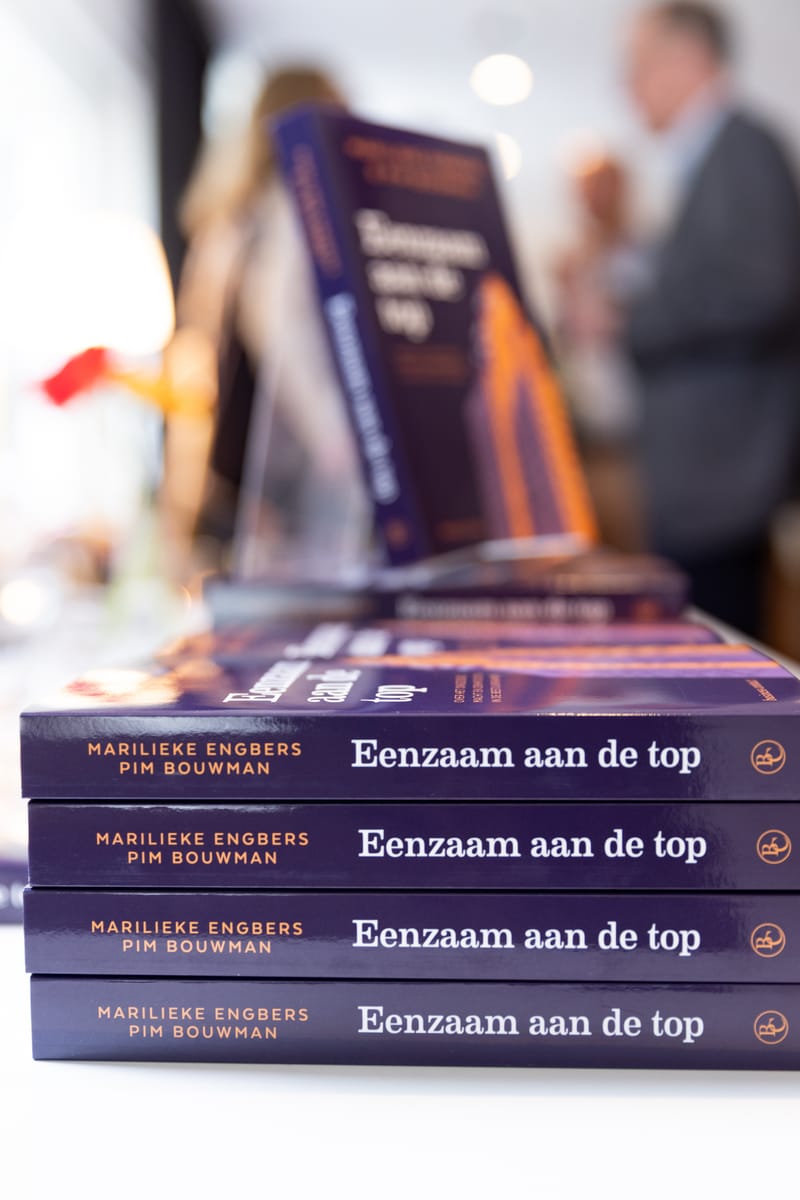
About 'Lonely at the Top' with Hartger Wassink and Marco Frijlink
Governance in conversation is an irregularly published podcast by Hartger Wassink and Marco Frijlink. In this episode, Marco and Hartger talk to Marilieke Engbers. Her new book 'Loner at the top' (written together with Pim Bouwman) will be published on May 21. The book is about the unsaid, power and fallacies in the boardroom. In the conversation, Marilieke discusses the development of her new book in detail and shares her insights and experiences
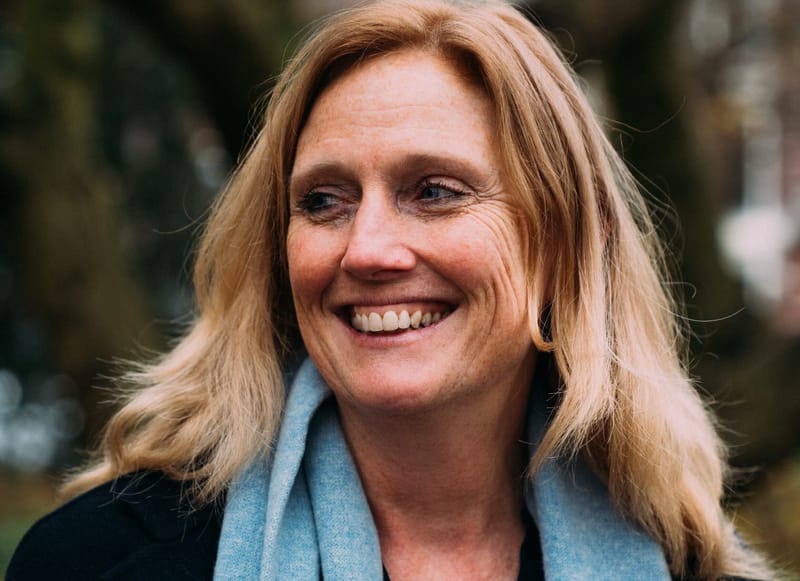
Kustaw Bessems (Rudderless)
Marilieke Engbers talks with Kustaw Bessems about her specialism: that which is not said, but is meant. And explains why critics such as Pieter Omtzigt or Sylvana Simons encounter so much resistance and why the corona approach is so prone to errors.
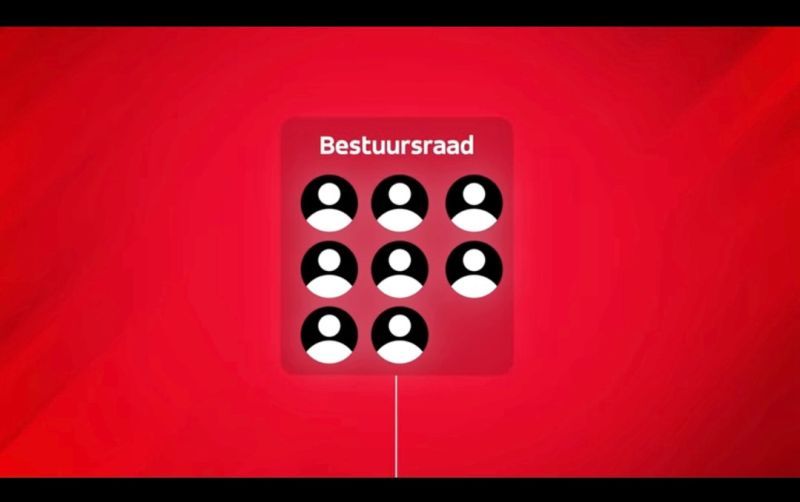
AJAX Governance and AT5
For AT5 I was asked to briefly explain my view on the governance of AJAX.
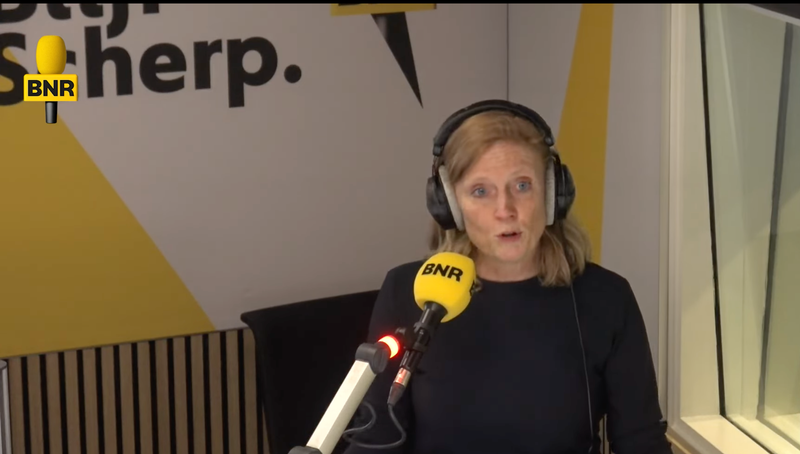
Ajax and Governance
De governance van Ajax – en dus ook het leiderschap en de cultuur – volg ik al een tijdje actief. Ik sprak er meerdere keren over bij BNR Nieuwsradio, wat betekende dat ik me echt moest verdiepen in de structuur en de spelers binnen die governance. Wat me fascineert, is hoe zichtbaar en bespreekbaar alles wordt wat governance interessant maakt
Power, dynamics and cooperation as governance
In this new podcast, Astrid Kraag and Marilieke Engbers delve into the world of governance collaboration. Together with host Iris Gündel, they discuss the dynamics that arise between board members, the often invisible influences that drive decision-making, and the role of power in this complex interplay. What happens behind the scenes? How do personal relationships and group dynamics influence the course of an organization? Together, they investigate the subtle forces at play in effective governance, and how leaders can better navigate this field of forces.
Publications
Interviews
The more room there is for different visions, the better the decisions of administrators, says economist Marilieke Engbers. This is important in a time when the issues facing politics, business and the public sector are becoming increasingly complex. Author Kustaw Bessems December 30, 2021
Read MoreThe Silent Killer of CEOs: The Unsaid in the Boardroom What is said out loud in the boardroom is important. What is not said is also important, but its impact is severely underestimated. What often kills CEOs is the unsaid. 'Even when it is for an innocent reason, it can have major consequences.'
Read More'The essence of my work is to investigate blind spots. I see myself as a governance activist, who is busy kicking against existing assumptions, kicking compassionately, because the system in the governance world has to change.'
Read MoreVU Magazine: According to VU economist Marilieke Engbers, there is much more to decision-making in large boardrooms than can be read in the transcripts of meetings. "Much remains unsaid."
Read MoreWhat is needed when the human is put central? What is not said? What are the dilemmas of the employee, the manager, of the system?
Read MoreThe Dutch may have a reputation for being blunt and direct, but in the meantime they leave much unsaid because they cannot deal with conflict. While conflict is the key to good governance, says researcher, advisor and author Marilieke Engbers. Connecting? Fine, but don't avoid tensions, she warns. Because dealing with a conflict together is the recipe for trust. 'Everyone is always talking about connecting,' sighs Marilieke at the kitchen table in her home in the heart of Amsterdam.
Read MoreWith the increasing complexity of organizations and their environment, the demands placed on the CFO are increasing. An important shift for the CFO is that he must use financial and non-financial results to balance 'looking forward' with 'looking back'. This requires the CFO to increasingly, together with the CEO, consider the question of how the organization's strategy can be realized. https://cfo.nl/artikel/column-marilieke-engbers-de-cfo-heeft-cruciale-rol-in-het-worden-van-lerende-organisatie
Read MoreShe would like to increase the 'counterforce' in the Netherlands. Whether it concerns the board of directors of a listed company or the supervisory board of a large educational institution: supervisors often seem to think and suspect all sorts of things, but often do not openly express that doubt or criticism at the time or in the place that is meant for it. https://files.cdn-files-a.com/uploads/4124171/normal_62cec0406606b.pdf
Read MoreThe Dutch may have a reputation for being blunt and direct, but in the meantime they leave much unsaid because they cannot deal with conflict. While conflict is the key to good governance, says researcher, advisor and author Marilieke Engbers. Connect? Fine, but don't avoid tensions, she warns. Because dealing with a conflict together is the recipe for trust.
Read MoreNews

Waarom gaat het steeds mis bij de rvc? "Alles wat een bedrijf leiden moeilijk maakt, zit in Ajax"
Last month, three members left Ajax's supervisory board. This exodus is certainly not unusual. The number of departures from the club's supervisory board in the past two years has already reached ten. AT5 spoke with several former supervisory board members to find out why things so often go wrong within the board, and specifically within the supervisory board. Many of them point to the board of the Ajax Association (the shareholder representation), which they say regularly plays a crucial role in the problems.
Read More
Intern toezicht in de jeugdzorg verdient méér aandacht
Ik heb als klankbordlid mogen bijdragen aan het onderzoek van de Jeugdautoriteit naar de kwaliteit van het intern toezicht in deze sector. Een wat mij betreft zeer belangrijke sector. Hoe wij als maatschappij zorgen voor de meest kwetsbaren laat zien hoe beschaafd we zijn in ons land.
Read More
Zelfevaluatie van de RvT: rituele dans of zinvolle reflectie?
Als mede-onderzoeker hebben we de vraag aan bestuurders, toezichthouders en zelfevaluatoren gesteld wat de waarde is van de zelfevaluaties in de zorg. Hoe zinvol zijn zelfevaluaties door raden van toezicht? Daar is weinig over bekend. In bestaande studies naar zelfevaluaties is vooral onderzocht óf en hoe er wordt geëvalueerd. De Governance Innovatie- en Adviescommissie bracht daarom nu in kaart met welk doel zelfevaluaties worden ingezet en of deze het gewenste effect sorteren, namelijk bijdragen aan een goed functionerend samenspel tussen bestuur, medezeggenschap en toezichthouders. Is de zelfevaluatie een aanpak die werkt, die als nuttig wordt ervaren en ook bijdraagt aan de kwaliteit? Of is het verworden tot iets ‘dat ook nog moet’ en daarmee een rituele dans?
Read More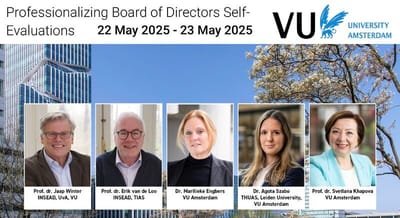
How to Conduct Effective Board of Directors Self-Evaluations
Join us for an exclusive 2-day event: “How to Conduct Effective Board of Directors Self-Evaluations?” Board self-evaluations are becoming a crucial part of effective governance. Yet, there is a lack of clear guidance on how to conduct them successfully. Additionally, a growing number of executive leadership and CEO coaches, as well as team coaches, are entering the field of board coaching, often treating boards as if they function like traditional teams. However, a board is not just a team and cannot be evaluated as one. Unlike conventional teams with clear hierarchies, boards operate within complex power dynamics, implicit norms, and shared, yet sometimes ambiguous, responsibilities. To bring greater professionalization to board reviews and self-evaluations, Vrije Universiteit Amsterdam (VU Amsterdam) is hosting an exclusive two-day event designed for: ✔ Board Members ✔ Board Coaches & Facilitators ✔ Board Secretaries, Advisors & Senior Governance Officers We are bringing together renowned experts and thought leaders from across Europe and beyond to share cutting-edge insights on: 📌 Board dynamics & governance best practices 📌 Evaluation methodologies & meaningful self-assessment approaches Featuring distinguished speakers, including Jaap Winter, Erik van de Loo, Marilieke Engbers, dr. Agota Szabo and Prof. dr. Svetlana Khapova.
Read More
Vakbond in gesprek met Utrecht over angstcultuur bij veegdienst
Utrecht - Employees at the cleaning service of the municipality of Utrecht have little confidence in the approach of the management to improve the unsafe working environment. Research, which RTV Utrecht managed to get its hands on, shows that there is racism and bullying in the department in which managers participate. Today, the trade union FNV will discuss this with the municipality. Marilieke has been asked to reflect on the situation.
Read More
Code Rood: Naar een nieuwe governancecode die inspireert tot reflectie en verandering
Al geruime tijd ben ik (onbetaald) in gesprek met de Maatschappelijke Alliantie over de noodzaak van een nieuwe governancecode die een governancecultuur faciliteert waarin paradoxen worden omarmd en besproken. Dit gesprek heeft geleid tot de oprichting van de alliantie Code Rood, een initiatief dat alles samenbrengt waar ik de afgelopen acht jaar aan heb gewerkt. Ik voel me vereerd en dankbaar dat de Maatschappelijke Alliantie, mij dit podium biedt om dit maatschappelijke en strategische gesprek te entameren. Van mijn promotieonderzoek en aanvullende studies voor de Autoriteit Woningcorporaties en BoZ, tot de circa 100 zelfevaluaties die ik heb begeleid, mijn opdrachten rondom toezicht op toezicht, en het omgaan met stille en open conflicten in de bestuurskamer – het zijn allemaal puzzelstukken in mijn zoektocht naar beter functionerende governance. Ook mijn werk met de controllers van de Controllersopleiding heeft hierin een belangrijke rol gespeeld. Een vraag die mij al die tijd heeft beziggehouden is: Waarom vervallen we steeds in herhalende, niet-productieve patronen met regelmatig debacles als gevolg? Welke aannames liggen ten grondslag aan dit gedrag? En waarom staat in governancecodes wat er staat, wat is er logisch en wat niet? Wat is de rol van de codes überhaupt in deze governancecultuur? Wat is de relatie tussen deze codes en wat er gedoceerd wordt in opleidingen? Ik ontdekte dat experts nieuwkomers informeren over hoe het 'hoort' of 'wat wel en niet werkt' en dat deze suggesties zo vanzelfsprekend zijn geworden, dat de work-arounds en beperkingen nauwelijks nog worden opgemerkt. Nog erger dat als je suggereert dat het anders kan dit eenvoudig leidt tot een defensieve reactie. Tijdens deze subtiele 'leerprocessen' lijkt het besef vaak te ontbreken dat governance ook op een andere manier benaderd kan worden – en in sommige gevallen wellicht zelfs zou moeten. Met Code Rood willen we een nieuwe governancecode creëren die niet dwingend is, maar inspireert. Het doel is niet om verplichtingen op te leggen, maar om de gesprekken in de boardroom en daarbuiten productiever en strategischer maar ook bewuster te maken. De woorden Code en Rood staan symbool voor de toenemende uitdagingen binnen governance: van de multicrisis in de maatschappij tot de groeiende eisen aan toezichthouders, commissarissen en bestuurders. Deze uitdagingen vragen om het continu verzoenen van governanceparadoxen en om diepgaande reflectie – meer dan het simpelweg afvinken van normatieve pas toe of leg uit-principes. Het woord rood verwijst naar het red team-principe. Dit concept, oorspronkelijk uit de militaire wereld, wordt gebruikt om plannen, ideeën en systemen kritisch te toetsen. Een red team werkt onafhankelijk en onderzoekt aannames en blinde vlekken vanuit een ander perspectief. Het doel is niet om te bekritiseren, maar om zwakke punten te identificeren, denkfouten te corrigeren en strategieën te versterken. In het kader van governance streeft Code Rood hetzelfde na: het fungeert als een kritische, maar constructieve tegenstem bij bestaande governancecodes. Waar sommige codes onbedoeld afvinkgedrag of ambiguïteit in de hand werken – problemen waar bestuurders en toezichthouders vaak zelf op wijzen – stimuleert Code Rood reflectie, congruentie en het legitimeren van het agenderen van lastige onderwerpen. Het doel van Code Rood is om te inspireren tot reflectie en actie, een frisse blik te bieden op wat nodig is om governance te versterken, moeilijke gesprekken te legitimeren en ruimte te creëren voor échte verandering. Dit alles in lijn met kernwaarden als inclusiviteit, congruentie, ethiek en duurzaamheid. Waarom dit nodig is, heb ik eerder toegelicht in een ingezonden stuk in het Financieele Dagblad in 2022, bij het verschijnen van de herziene Corporate Governance Code. Met Code Rood willen we samen een stap zetten richting een governancecultuur die daadwerkelijk bijdraagt aan betere besluitvorming en samenwerking. Dit initiatief nodigt uit tot nieuwe gesprekken, andere perspectieven en inspirerende inzichten. Als je meer wilt weten verwijs ik graag naar de website van maatschappelijke alliantie:https://www.maatschappelijkealliantie.org/coderood/
Read More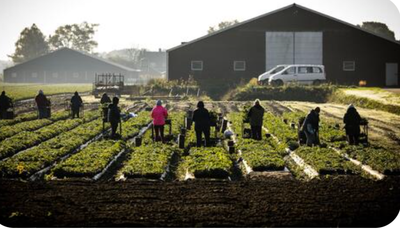
Lezersreactie in het FD over gebrek aan Toekomstgerichtheid van bestuurders
In mijn lezersreactie van vandaag in Het Financieele Dagblad reageer ik op de opinie van Leen Paape en Leo van de Voort van 24 oktober, waarin zij stellen dat bestuurders niet tegelijk ‘op de bal kunnen spelen’ en de toekomst scherp in zicht kunnen houden, en voorstellen om de functies van deze twee rollen te wijzigen. Wat ik vaak zie, is dat bij governance-uitdagingen al snel wordt gegrepen naar structuur- of beleidswijzigingen, terwijl de werkelijke oplossing m.i. eerder ligt in het aangaan van het moeilijke gesprek waarvoor iedereen nu al verantwoordelijkheid draagt. De CEO draagt de verantwoordelijkheid voor het formuleren en uitvoeren van strategie, terwijl de toezichthouder erop toeziet dat de juiste dingen worden gedaan. Andere stakeholders hebben hierin ook een belangrijke rol: zij moeten hen wijzen op hun verantwoordelijkheid. Samen moeten zij hun verantwoordelijkheid nemen door elkaar aan te spreken als de taken niet goed worden uitgevoerd, of in te grijpen wanneer nodig. Een toekomstbestendige governance vraagt dus om een kwalitatief hoogwaardig strategisch gesprek waarin bestuurders, toezichthouders en andere stakeholders hun verantwoordelijkheid nemen en samen reflecteren op de kwaliteit van de uitvoering, de onderlinge machtsverhoudingen en de impact van hun beslissingen. Dit gesprek is persoonlijk, emotioneel en daarom vaak moeilijk. Het is dan ook begrijpelijk dat de neiging bestaat om dit gesprek uit de weg te gaan, maar het hoort nu eenmaal bij de verantwoordelijkheid die samengaat met de rol. Voor wie benieuwd is naar mijn bijdrage in het FD, het is de derde reactie in: 'Genoeg bedrijven waar businessplan alleen werkt door inzet arbeidsmigranten, en andere lezersreacties'
Read More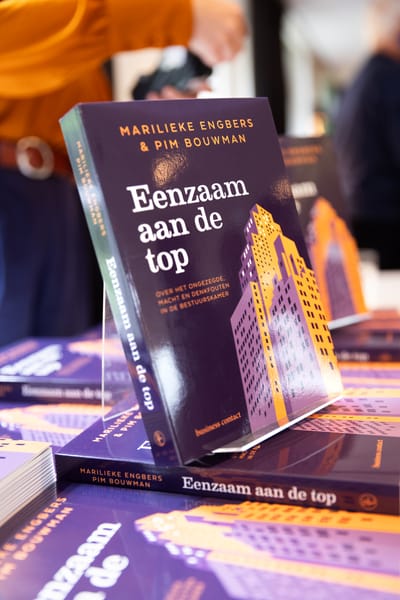
OPROEP! Boekbespreking Eenzaam aan de Top
Good news about our book 'Lonely at the Top'. We are already on the second edition. To celebrate this, we want to organize a series of book reviews in smaller groups of six to eight people. The condition is that the book has been read, or better yet, studied and that you then write a review of what you do or do not recognize, what is relevant about it, what it does to you personally, what you can do with it yourself, or think should be done with it. A review with depth. In a 'post' referring to the book in which you tag us. Depending on the interest, we can do this 'simply' at our home, in the evening, combined with a meal. Is that something? Alternative ideas are also welcome of course! We would love to hear them.
Read More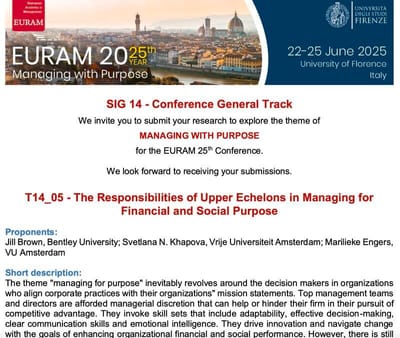
Invitation to submit papers to EURAMn conference!
We invite you to submit your research papers to our EURAM European Academy of Management 2025 track: T14_05 – “The Responsibilities of Upper Echelons in Managing for Financial and Social Purpose.” The conference will be held at the University of Florence, Italy – one of the most inspiring places on earth! This time, I have the pleasure of co-chairing the track alongside my co-proponents, Jill Brown from Bentley University and Svetlana Khapova from Vrije Universiteit Amsterdam (VU Amsterdam). Our goal is to help you develop your papers while also ensuring a fun and engaging experience! The theme “managing for purpose” inevitably revolves around the decision makers in organizations who align corporate practices with their organizations” mission statements. Top management teams and directors are afforded managerial discretion that can help or hinder their firm in their pursuit of competitive advantage. They invoke skill sets that include adaptability, effective decision-making, clear communication skills and emotional intelligence. They drive innovation and navigate change with the goals of enhancing organizational financial and social performance. However, there is still more work to be done in unpacking the black box of strategic leadership that incorporates both financial and social objectives.
Read More
Ongevraagd advies aan commissarissen bij BNR
Bert Huisjes keert voorlopig niet terug bij WNL. Dit heeft Loek Hermans, voorzitter van de raad van toezicht, dinsdagmiddag in een interne e-mail aan de medewerkers meegedeeld. Eerder had de raad van toezicht aangekondigd dat Huisjes, die onderwerp van discussie was na een onderzoek naar grensoverschrijdend gedrag, juist wel zou terugkeren. En dus is het tijd voor ongevraagd advies aan toekomstig commissarissen. En dat komt van Marilieke Engbers, Universitair docent governance & strategie aan de VU en schrijver van het boek 'Eenzaam aan de top'
Read More
FD: Het ongezegde uitspreken in de bestuurskamer zorgt voor betere besluiten
Marilieke Engbers is on a mission. The leadership expert wants to open the black box of the boardroom, to show how blind spots and unspoken thoughts lead to problems. "A lot remains unsaid in meetings, but directors and supervisors are often not aware of that."
Read More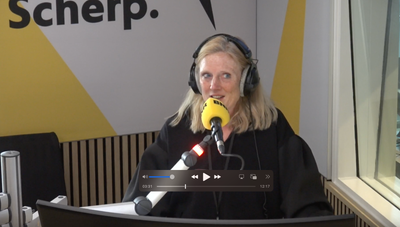
In gesprek bij BNR met Liesbeth Staats en Kees Dorresteijn over ons boek "Eenzaam aan de top"
On May 23, I had the opportunity to talk to BNR about Lonely at the Top. Pim had to laugh when he heard me say 'we are fascinated by therapy'. Maybe not the smartest thing to say if you want to sell your book well. But I did my best :-) If you want to laugh along, it starts after the 43rd minute.
Read More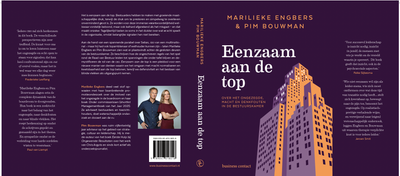
Proefdruk "Eenzaam aan de top gereed" weer een stapje verder
Yesterday Pim Bouwman and I were shown the proof of the outside of our book "Lonely at the top, about the unsaid, power and fallacies" from our Business Contact Publisher. With the 'blurps' of the four people we asked to read the book on the inside flap. We received their response with great anticipation and were fortunate to discover that they had actually extracted the essence that we were trying to convey from the book.
Read More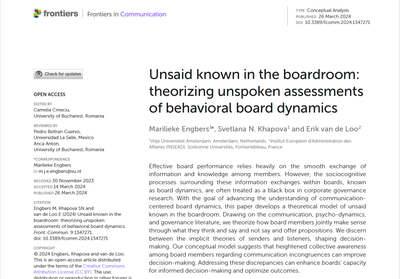
Nieuw artikel gepubliceerd!
I am proud that I have managed to publish a paper again. This is a 'conceptual' paper. Difficult to publish. This is my first paper for my PhD research. Feedback I kept getting is that it is (too) eclectic. I actually think this is very positive feedback because I think that these times require a more multidisciplinary approach. The paper is called: Unsaid known in the boardroom: "Unsaid known in the boardroom: theorizing unspoken assessments of behavioral board dynamics".
Read More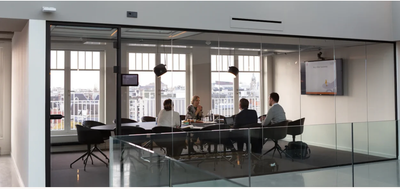
Ongemakkelijke onderwerpen niet op agenda bestuurskamers
Uncomfortable topics often go undiscussed in boardrooms. 'Problems can therefore escalate, with major consequences for the organization and society,' says Marilieke Engbers, journalist and VU researcher in leadership and change.
Read More
BNR Boardroompanel 14 September 2023
About the episode Experts warn of a manhunt for listed companies now that they have to report on their impact on the climate and the living environment from 2024. Are billion dollar claims lurking? And: Did Rabobank fail to fulfill its duty of care in the bankruptcy of travel company Oad in September 2013? We discuss this and more in the boardroom panel.
Read More
De spelregels van Governance
Directors and supervisors have a lot of power. How is the supervision of this power organised? What is the quality of the opposing force? And how is the transition that is necessary due to climate change, among other things, facilitated or hindered by the governance rules? NCD talked to Marilieke Engbers about untapped potential in the boardroom, the rules and paradigms of governance, young people in the boardroom and major social challenges.
Read More
Mistigheid rond voordracht Hoekstra is vooral gemiste kans
Contribution to the Financieele Dagblad on August 28, 2023
Read More
In debat over Tata Steel speelt ook de rol van de toezichthouder
Contribution to the Financieele Dagblad on June 20, 2023
Read More
Publication in CGIR: conflict climates
This week I received great, or rather fantastic news that I can't keep to myself! The academic paper that I have been working on for about 4 years will be published in upcoming months in the CGIR Journal!
Read More
“Als je emoties links laat liggen, ben je alsnog niet in control"
Article in the VRC magazine!
Read More
BNR Boardroompanel
This week I had the opportunity to join Thomas van Zijl from BNR again as a boardroom panel member.
Read More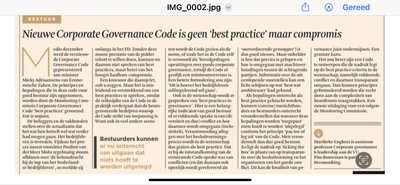
De Nieuwe Corporate Governance Code is teveel een compromis
Our (Pim Bouwman) opinion piece about the updated Corporate Governance Code in Het Financieele Dagblad.
Read More
Bijdrage aan podcast de ommezwaai
In een gesprek over macht, tegenmacht en het onvermogen van onze leiders om het voortouw te nemen, komt Sander samen met journalist Jeroen Smit, gedragswetenschapper Reint Jan Renes en assistent professor Management & Organisation Marilieke Engbers tot een verrassend nieuw inzicht.
Read More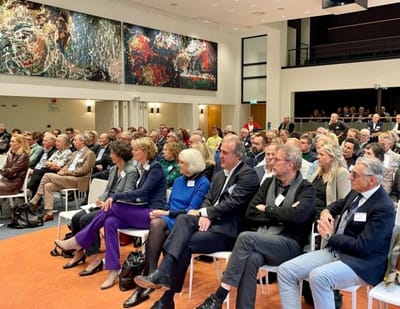
Congresverslag AMG /SER
Executive directors, supervisory directors and members of works councils must 'construct constructively' and work together in the governance triangle, as emerged during the eighth congress of the Alliantie Participation & Governance. About the power of vulnerability, people-oriented thinking and acting, daring to say the unsaid and above all personal leadership: 'Examine your own blind spots and thinking errors.'
Read MoreContact
- Kerkstraat 393-1, 1017HX Amsterdam, Netherlands
- +31-643254536 - Reconsulting
- Marilieke@reconsulting.com
- Mon-Fri - 08: 00-19: 00